
Short-term rehab is often recommended after surgery to help seniors recover from illness, injury, and the surgical procedure itself. If you’ve recently had surgery or expect to need it in the future, your doctor may have recommended rehab services after you go home from the hospital. It’s often an important part of recovery that will help you or your loved one strengthen muscles and restore function. Want to learn more about what to expect from short-term rehab after surgery? This article will prepare you for whatever comes your way.
What Is Short-Term Rehab?
So, what does short-term rehab mean? The word “rehab” is a shortened form of rehabilitation, or the action of restoring someone to health or normal life through training and therapy. While “rehab” can refer to drug or alcohol rehabilitation services, short-term rehab after surgery is an entirely different situation. The goal of short-term rehab is to regain strength, mobility, and independence following an injury, illness, or surgery.
Unlike inpatient rehab, which happens during a hospital stay, short-term therapy is intended to transition patients home after a hospital stay. Short-term rehab focuses on daily intensive physical, occupational, or speech therapy, typically in a residential skilled nursing and/or rehab facility. Unlike long-term care, short-term rehab typically takes less than 30 days to complete.
What Happens During Short-Term Rehab After Surgery?
Rehabilitation services are usually provided by physical, occupational, and/or speech therapists. You’ll work with your medical team to set goals following your surgery, and they’ll create a treatment plan with the appropriate medical professionals to help you reach those goals. Typically, the goal of short-term rehab is to restore as much independence as possible, so you can return home.
What rehab sessions after surgery look like depends on what type of surgery you’ve had, and your physical and cognitive abilities. Typically, a rehab center will provide:
- Physical therapy, to improve your strength and mobility with stretching and exercises.
- Occupational therapy, to help with activities of daily living like grooming, bathing, and dressing.
- Speech therapy, if necessary, to help with skills like communication.
- Pain management and medication monitoring to help you avoid unnecessary discomfort and manage any other conditions or complications.
- Nursing care and wound care to aid and monitor your overall health and wound healing.
Physical, occupational, and speech therapy sessions for post-surgery short term rehab usually take between one and three hours each day. A great residential skilled nursing or rehab facility will also offer meals, activities, and other services and amenities to ensure a high quality of life.
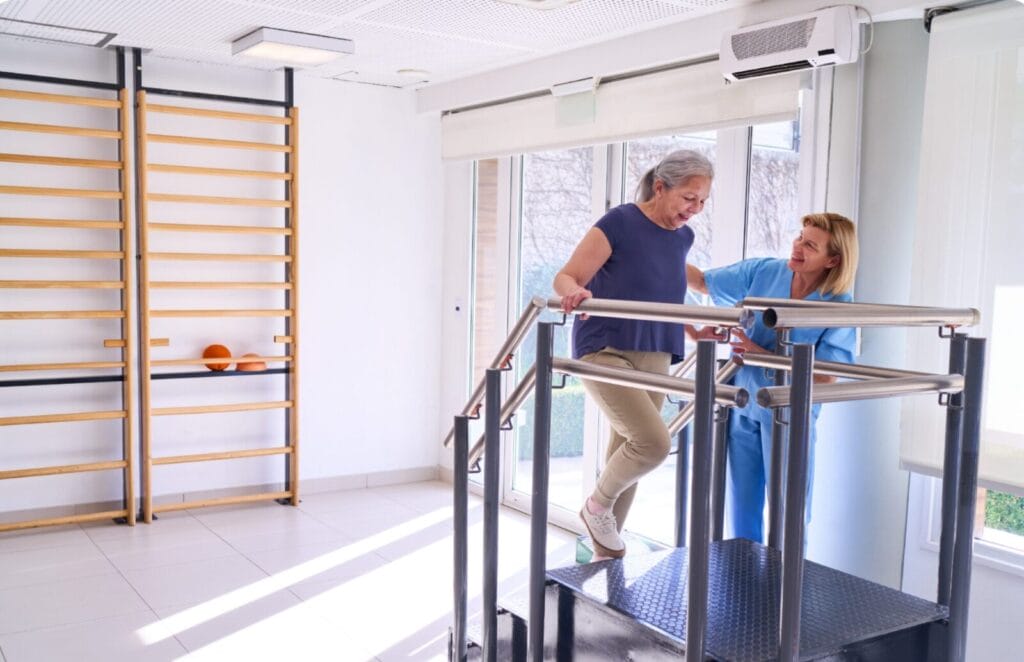
Rehab often takes place in a special gym, with the aid of a physical therapist.
How Long Does Short Term Rehab After Surgery Take?
There are many factors that affect how long you will spend in a skilled nursing or short-term rehab community. This includes:
- The severity of your illness or injury
- The complexity of the surgery
- Your age and overall health
- Your medical history
- Your attitude and motivation
Many of these factors are out of your control. Everyone’s body is different, and therefore will recover at a different rate. However, if you are willing to work hard and maintain a positive attitude, you may be able to complete rehab more quickly.
Short-term rehab stays after surgery can range from as little as a few days to several months. On average, most people spend about two to four weeks in a post-surgery rehab program.
Tips for a Successful Rehab Stay
If you’re anxious to get home or back to your usual senior living community, there are a few ways you can make the most of your short term rehab stay. Physical, occupational, and speech therapy sessions are generally intense, and may last an hour or more. Exercise is often hard work and not particularly pleasant, so it can be difficult to be motivated. However, if you listen to your therapist and work hard, you’ll probably reach your goals more quickly. It’s also important to communicate with all the members of your care team. If you aren’t improving, or are having severe pain or other issues, make sure you let your therapist, nurses, and doctors know.
Once you complete your short-term rehab program and are cleared to return home, you’ll be given discharge instructions, which usually include stretches and exercises to continue your recovery. Try to follow discharge instructions completely and carefully, because since short-term rehab usually only lasts a few weeks, you will still have a ways to go before you are fully recovered. It may be wise to arrange support at home before you are discharged as well.
Final Thoughts
While short term rehab after surgery can seem inconvenient or even scary, rest assured that this process will help you recover as quickly and completely as possible. Choosing a great short-term rehab facility or program can also make a huge difference. If possible, find a skilled nursing community that offers in-house rehabilitation services. This way, you’ll not only get your short-term rehab out of the way, but you’ll also be supported with a 24/7 skilled nursing team. Plus, you’ll enjoy more home-like accommodations, as well as fun activities, great meals, and life enrichment.
Short-term rehab after surgery is the gold standard of care to make sure you get back to the way things were. Need help finding a great short-term rehab facility near you? Contact a Stellar Living Skilled Nursing Community today, and see what options are available.