What is skilled nursing care? If you’re asking what these terms mean, you’re not alone. Loved ones of seniors often find themselves faced with the difficult task of finding skilled nursing care during an emotional and uncertain time. The last thing you need right now is less clarity and more confusion. We’re here to help guide you through the world of skilled nursing care, and answer all the questions you may have.
Quick Answer: What is Skilled Nursing Care?
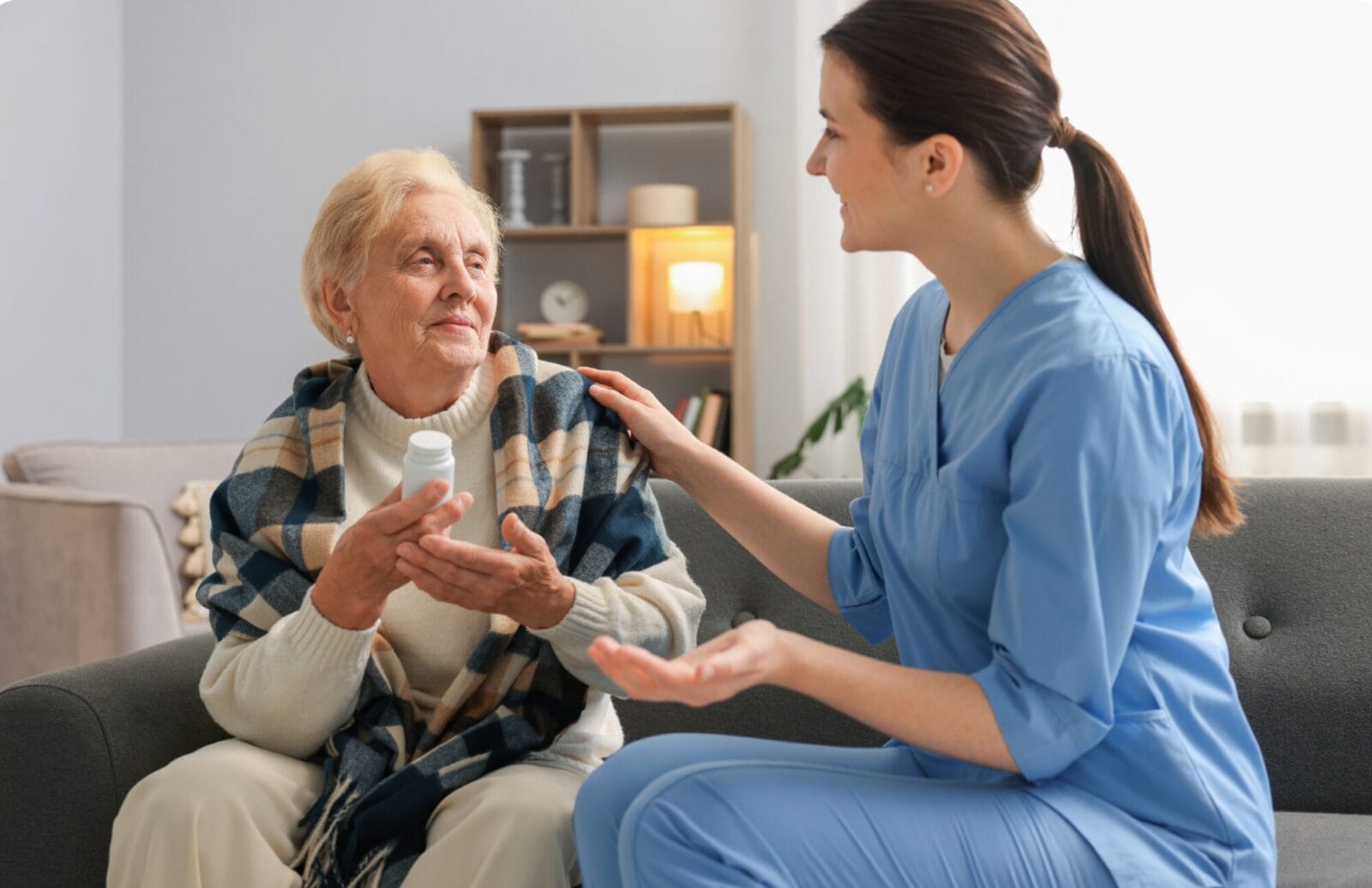
Skilled nursing care is a type of senior care that includes medical services provided by licensed and certified doctors, nurses, and other medical professionals. Unlike other types of senior care, skilled nursing focuses on medical and clinical treatment such as wound care, IV therapies, rehab, medication management, and medical monitoring.
-
- This type of care may be necessary for seniors after a hospital stay, serious illness, stroke, surgery, injury, or worsening of new or chronic health conditions.
- Skilled nursing care refers to medically necessary care provided by licensed healthcare professionals under a doctor’s direction.
- It goes beyond assistance with daily life, and focuses on treatment, recovery, and ongoing clinical support.
- Skilled nursing care can be provided in a skilled nursing community (also called a skilled nursing facility, or SNF) or through skilled nursing home care services.
Skilled Nursing Communities vs Other Types of Senior Living
To answer the question “what is skilled nursing care,” we also need to establish what is not skilled nursing. Skilled nursing care is usually provided within a senior living community or facility. Senior living communities offer a variety of levels of care. This includes:
- Independent living and 55+ communities, for active seniors who don’t need any care
- Assisted living communities, for seniors who need help with activities of daily living
- Memory care communities, for seniors in middle to late stages of Alzheimer’s or dementia
- Skilled nursing & rehab communities, for the most care seniors can receive outside of a hospital.
Skilled nursing is the highest level of care offered in senior living communities. It is the only type of senior living community that can offer 24/7 complex medical care like IV therapies, wound care, and intensive rehabilitation services. Medical care is directed by and provided under the oversight of physicians.
Assisted living and memory care communities provide support for daily life, like dressing, grooming, mobility, eating, and medication management. They may have nurses on staff to help with medical oversight and medication administration, but most of the care provided is not medical care.
Who Provides Skilled Care?
As the name implies, whether in a community or at home, skilled nursing care can only be provided by skilled medical professionals. This may include:
- Registered Nurses (RNs)
- Licensed Practical Nurses (LPNs)
- Certified Nursing Assistants (CNAs)
- Doctors or physicians (MDs)
- Physician Assistants (PAs)
- Nurse Practitioners (NPs)
- Physical, occupational, and speech therapists
These medical providers work together, usually under the direction of a medical director, to create and implement a customized treatment plan for each person who needs skilled nursing care.
What Is Considered Skilled Nursing?
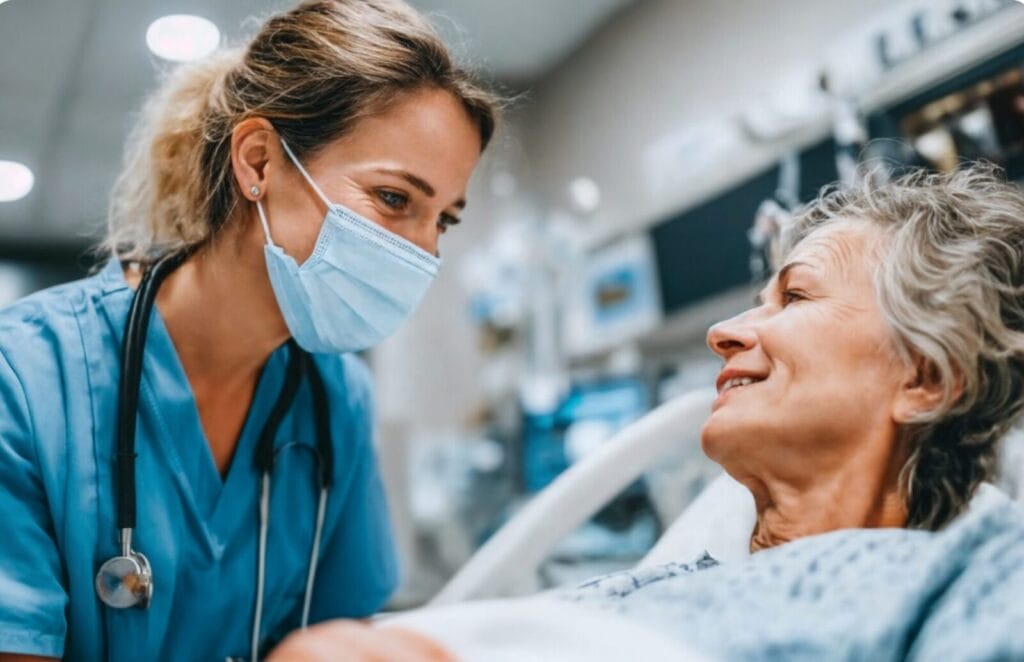
A senior living community is considered a skilled nursing facility, skilled nursing community, or SNF if they provide around-the-clock medical care by nurses under the direction of a doctor. Home care is also considered skilled nursing care when it is provided by nurses under the supervision of a doctor.
Because insurance companies, Medicaid, and Medicare may cover skilled nursing services, there are technical requirements to be considered a skilled nursing facility (SNF). Essentially, skilled nursing care is any necessary medical care, prescribed by a doctor, that can only be provided by a nurse or medical professional.
Common Skilled Nursing Services
Skilled nursing communities and home health skilled nursing providers often offer these medical services:
- Medication management and administration
- Emergency medical care
- IV therapy and injections
- Tube feeding
- Rehabilitation services
- Physical therapy
- Occupational therapy
- Speech therapy
- Wound care
- Post-surgical monitoring
- Pain management
- Diabetes management
- Cardiac care and monitoring
- Infection control and management
A skilled nursing community typically also offers:
- Assistance with activities of daily living, like bathing, grooming, eating, and mobility
- Meals
- Accessible private or semi private rooms
- Social and recreational activities
- Transportation services
Skilled Nursing Home Care vs a Skilled Nursing Community
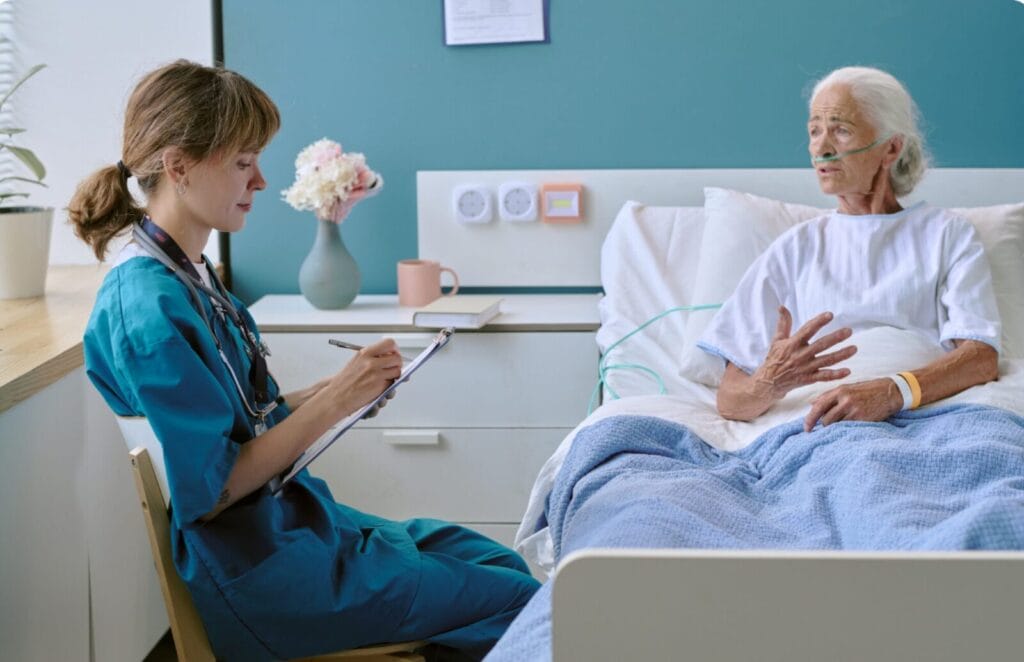
Skilled nursing care can be provided in a hospital, at home, or in a skilled nursing community (also called a skilled nursing facility, or SNF). Care provided at a hospital usually happens due to an acute illness, injury, accident or surgery. It is usually in response to an emergency.
On the other hand, skilled nursing home care, or care at a skilled nursing facility, usually happens after a patient is discharged from the hospital, but still needs medical care or monitoring. It can also become necessary if a chronic condition, like heart disease or diabetes, worsens to the point of needing daily medical care.
What Is Skilled Nursing Home Care?
Skilled nursing home care, or in-home skilled nursing care, is exactly what it sounds like: skilled nursing services provided in your home or your loved one’s home. A home health provider, like a nurse or physical therapist, can come to your home to provide some types of care. Not all services can be provided within the home, and around-the-clock help can become very expensive. Emergency services are also not readily available in a home environment. So, in-home care is a good option when you or your senior needs less intensive, short-term care.
What is a Skilled Nursing Facility (SNF) or Skilled Nursing Community?
Skilled nursing and rehab communities, also called skilled nursing facilities (SNFs), provide specialized residential care and rehabilitation for people with significant health needs. These communities typically employ nurses, certified nursing assistants, physical and occupational therapists, doctors, dietitians, and more medical professionals. Staff members provide medical care, like medication management, monitoring of blood pressure, blood sugar, and other vital signs, and treatment of injuries. They also coordinate care with doctors about any new issues or symptoms.
There are many benefits to skilled nursing care at a skilled nursing community. For example, most communities offer other services in addition to medical services, like meals, social and recreational activities, and supportive help with daily life. They are also accessible environments that allow your senior to still feel at home and get outdoors in a safe, supervised way. These communities usually partner with hospitals and can also offer a smoother transition from the hospital, with no interruption of care. Around-the-clock care and supervision mean that emergency services are also readily available if necessary.
What is a “Nursing Home”?
The term “nursing home” usually means the same thing as “skilled nursing community.” Most senior living facilities or communities avoid the term “nursing home” because it has outdated and negative connotations. Skilled nursing communities can still feel elegant, warm, and homey. A great skilled nursing community should feel more like a home than a hospital.
Some people and organizations consider a skilled nursing facility or community as short-term care intended to be a transition stage between the hospital and back home, and a “nursing home” as long-term custodial care. However, many skilled nursing communities often offer both short-term and long-term stays depending on you or your loved one’s needs.
When Is Skilled Nursing Needed?
Seniors often need skilled nursing care and rehab after surgery, severe illness, injury, or after a hospital stay. For example, your loved one may need skilled nursing care if they have suffered a stroke, fall, or heart attack. They might also need skilled nursing care if they are managing multiple severe or complex medical conditions, or if an existing chronic condition worsens. Because it is medical care, not personal care, a doctor’s order is required for a person to receive skilled nursing care.
How Much Does Skilled Nursing Cost?
Many children and loved ones of seniors are concerned about the cost of skilled nursing. This is a valid concern, because as the highest level of care, it is also the most expensive. According to MedicaidPlanningAssistance.org, the 2026 average daily cost for a shared room in a skilled nursing facility is $327, and the average monthly cost is $9,945. Prices vary widely, from $190 per day in parts of Texas, to over $1,000 a day in Alaska.
However, insurance, Medicaid, and Medicare can all help pay for skilled nursing care, so your final bill will likely be significantly lower. Read on to learn more about paying for skilled nursing care, insurance, Medicare, and Medicaid.
Paying for Senior Care: Private Pay
There are lots of different ways to pay for skilled nursing. Private pay is always an option, where seniors use savings, retirement accounts (401k/IRA), pensions, and Social Security income. Many seniors sell their home or assets to provide an additional financial cushion. Insurance, Medicaid, and Medicare are also great resources–keep reading for more on these options.
Does Insurance, Medicaid, or Medicare Cover It?
The short answer: yes, insurance, Medicaid, and Medicare can all cover skilled nursing care. The long answer is a little more nuanced.
Some types of insurance might pay for skilled nursing care. Long-term care insurance is a great option if you’ve planned ahead. However, this type of insurance policy must be purchased years before you want to use it. Some life insurance policies will allow you to use the cash value, or a percentage of the cash value, of your policy to pay for long-term care. Private healthcare insurance plans may also cover short-term skilled nursing following.
Medicare will cover some costs of short-term skilled nursing care in a shared (semi-private) room. Medicare Part A covers up to 100 days in a skilled nursing facility after a qualifying hospital stay. The Part A deductible covers the first 20 days per benefit period. After that, you pay a share of the cost for each additional day of your stay. You start paying the full cost after 100 days.
Medicaid will also pay for skilled nursing care. Programs vary from state to state, but they’re required to cover skilled nursing facilities for eligible seniors. Medicaid will often cover 100% of your stay at a skilled nursing community for as long as it is medically necessary. Like Medicare, they typically only pay for shared rooms, not private rooms. Not all skilled nursing communities accept Medicaid as a payment option, but most do.
To qualify for Medicaid help, you must meet financial income and asset requirements. You will also have to prove that skilled care is medically necessary. Those who don’t qualify for Medicaid due to income and assets can often use a Medicaid spend down program. A “spend down” program requires you to use your own income and assets until they run out, at which point Medicaid will step in to cover your care.
Why Choose a Stellar Living Community?
Now that we’ve hopefully answered all your questions, including “What is skilled nursing care?”, how do you choose the best skilled nursing community for you?
Stellar Living provides expert management for top-tier skilled nursing communities. Rather than a clinical hospital feel, these resort-style communities offer warm, hopeful, and respectful care. Stellar Living has skilled nursing communities available in the following Colorado cities. Click to learn more about each community.
Skilled Nursing Communities in Colorado
- Bear Creek Skilled Nursing in Colorado Springs, Colorado
- Willow Tree Care Center Skilled Nursing & Rehab in Delta, Colorado
- Springs Village Care Center Skilled Nursing & Rehab in Colorado Springs, Colorado
- Skyline Ridge Skilled Nursing & Rehab in Cañon City, Colorado
- Mantey Heights Skilled Nursing & Rehabilitation in Grand Junction, Colorado
- La Villa Grande Care Center in Grand Junction, Colorado
- Cherrelyn Healthcare Center Rehab, Skilled Nursing & Short-Term Care in Littleton, Colorado
- Cedars Healthcare Center Rehab, Skilled Nursing & Short Term Care in Lakewood, Colorado